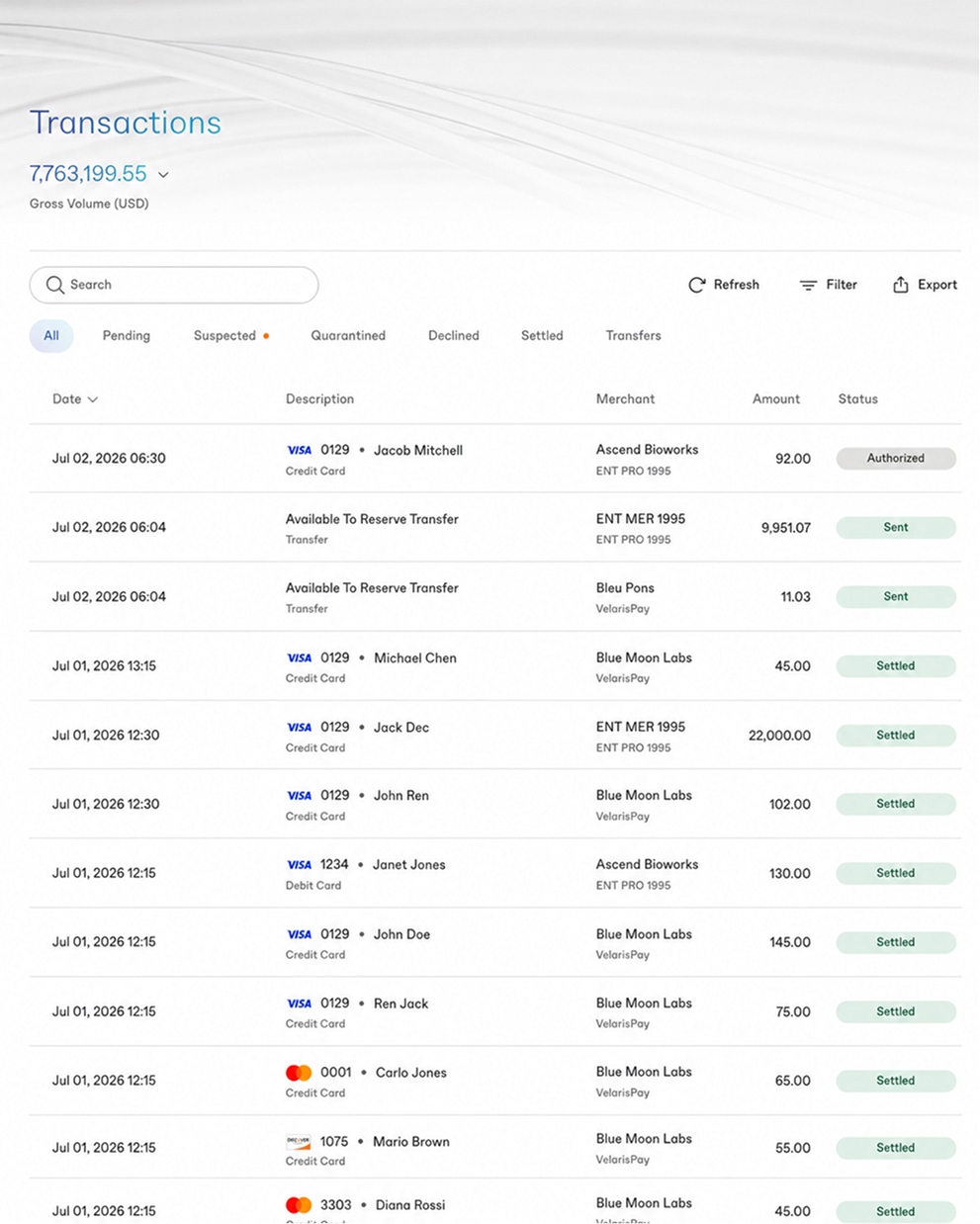
GivePayments connects to the stores and stacks you already run, WooCommerce, Shopify, and similar carts, plus a developer API, as a high-risk-ready payment gateway. You add processing that's underwritten for your category to your existing checkout without rebuilding it, and the modern, performance-focused infrastructure keeps the payment step fast.
Keep your store, change what's behind the checkout
The frustrating part of being a high-risk merchant on a mainstream platform isn't the storefront; it's the payments. You've built a WooCommerce or Shopify store that works, and then the default payment option either won't board your category or boards it and freezes the first time disputes climb. The fix shouldn't be ripping out your store and starting over. It should be swapping what sits behind the checkout for an account that's actually underwritten for your business.
That's what our integrations do. GivePayments connects to the carts and stacks you already run as a high-risk-ready gateway, so you add processing underwritten for your vertical to your existing checkout rather than rebuilding anything. The storefront stays; the account behind it becomes one that won't drop you.
What we connect to
Meet you where you already sell
WooCommerce
Connect as a high-risk-ready WooCommerce payment gateway, the thing most plugins quietly aren't. Process cards and recurring payments through an account boarded for your category, with the fraud screening and chargeback defense high-risk verticals need.
Shopify
Where high-risk merchants hit the platform-restriction wall most often. Connecting through our gateway gives a Shopify store high-risk-ready processing without abandoning the platform you've built on.
Other carts & stacks
The same applies to the other carts and stacks you already run: the goal is to meet you where you sell rather than force a migration.
Payment gateway API
Developers integrate directly, tokenization, hosted payment pages, webhooks, for custom checkouts and platforms, with the same underwriting behind the API as behind the plug-in connections.
Recurring billing
Subscriptions and rebills run on the same high-risk-ready account, whether you connect through a cart or build against the API.
Fast by design
Hosted pages and tokenization load quickly and keep card data off your servers, so the payment step isn't the part of your page that drags.
One account behind every connection
A custom build inherits the same controls as a plug-in store
When a pre-built connection isn't enough, a custom checkout, a platform, an unusual flow, developers integrate directly through the payment gateway API: tokenization, hosted payment pages, webhooks, and recurring billing. The same high-risk-ready account sits behind the API, so a custom build inherits the same underwriting and risk controls rather than trading them away for flexibility.
Payments don't live alone, they feed the systems you run your business on. Through the API, data exports, and automation connections, GivePayments links to the tools around your checkout.
Tie payments to customer records through the API and webhooks, so a charge, refund, or dispute can update the CRM your team already works in.
ERP systems
Push payment events into the ERP that runs operations, connecting order, fulfillment, and finance to what actually settled.
Automation (Zapier-style)
Use webhooks and automation connectors to trigger workflows on payment events, notifications, record updates, downstream actions, without custom code.
Reporting & data exports
Pull structured data from the merchant portal on a schedule for analytics, finance, or a warehouse of your own.
Build your own
When there's no pre-built connector, the developer API and webhooks let you wire GivePayments into anything that speaks HTTP.
How it works
Add the gateway, keep the storefront
A mainstream WooCommerce or Shopify payment option assumes a low-risk merchant and behaves accordingly: easy to install, quick to freeze. Connecting GivePayments instead means your store processes cards and recurring payments through an account boarded for its category. You add the gateway to the checkout you already have; you don't rebuild the store.
A slow checkout costs conversions, so the integration is built to be light. Hosted pages and tokenization load quickly and keep card data off your servers, and the modern, performance-focused infrastructure means the payment step isn't where your page drags. Integrations connect to a boarded account, so the first step is approval, and the same high-risk-ready account powers every connection, from a plug-in store to a fully custom build.
FAQ
Integrations FAQ
Does GivePayments work with WooCommerce?
Yes. GivePayments connects to WooCommerce as a high-risk-ready payment gateway, so a WordPress/WooCommerce store can take cards and recurring payments through an account that's actually underwritten for its category, rather than a mainstream plugin that boards fast and freezes when volume or disputes climb. You add the gateway to your existing checkout; you don't rebuild the store. It's a real organic answer to “WooCommerce payment gateway for high-risk merchants.”
Does GivePayments work with Shopify?
Yes, through our gateway connection, so a Shopify store can process on a high-risk-ready account. High-risk merchants on Shopify run into platform payment restrictions and third-party-gateway limitations constantly; connecting GivePayments gives you processing that's underwritten for your vertical and managed for chargebacks, without abandoning the storefront you've built.
Can I integrate through an API?
Yes. Beyond the pre-built cart connections, developers can integrate directly through our payment gateway API, tokenization, hosted pages, webhooks, and recurring billing, for custom checkouts and platforms. The same high-risk-ready account sits behind the API, so a custom build gets the same underwriting and risk controls as a plug-in store.
Will integrating slow down my site?
No, and our infrastructure is built to be fast. The gateway uses hosted pages and tokenization that load quickly and keep card data off your servers, and the modern, performance-focused stack means the payment step isn't where your checkout drags. A slow checkout costs conversions, so the integration is built to be light rather than a heavy script that bogs the page down.
Does GivePayments connect to QuickBooks, Salesforce, and Zapier?
Yes. QuickBooks has the deepest connection: a full API integration that syncs transactions, fees, refunds, and settlements automatically, plus CSV import/export in QuickBooks' own format for file-based reconciliation (which also covers Desktop workflows). CRM and ERP systems such as Salesforce connect through the API and webhooks, so payment events can update the records your team works in. And webhook-driven automation lets you trigger Zapier-style workflows on payment events. Where a pre-built connector doesn't exist yet, the developer API and webhooks let you wire GivePayments into any system that speaks HTTP.
Run a store on WooCommerce, Shopify, or your own stack and need processing underwritten for your category? Integrations connect to a boarded account, so the first step is approval.