Commercial-card heavy mix
B2B skews toward commercial, corporate, and purchasing cards, which carry higher default interchange than consumer cards.

Get paid by card or ACH on invoices and pay-by-link, with Level 2/3 enhanced-data support that cuts interchange on commercial cards. Our published range for standard B2B is 3.0–5.0%, with a final rate set by underwriting, no terminal, no portal, no development work.
Answer first
You did the work, you sent the invoice, and now you wait, thirty days, then a follow-up, then a check that has to clear. For a lot of B2B sellers, the longest delay in the whole transaction comes after the customer has already agreed to pay. That gap is pure friction: it ties up cash flow, costs staff time chasing receivables, and exists mostly because the payment method is stuck in the mail.
The fix is to let the customer pay the moment they're ready, on the device in their hand. A pay-by-link tied to the invoice turns “I'll cut you a check” into a click. That's the core of what we set up for B2B and invoice-based merchants: card and ACH acceptance that meets the customer where they are, priced for the commercial-card mix B2B actually runs, with the enhanced-data plumbing that keeps the cost down.
Why it's high risk
B2B skews toward commercial, corporate, and purchasing cards, which carry higher default interchange than consumer cards.
Invoices run big, so per-transaction amounts and exposure are higher than a typical consumer sale.
Networks discount interchange only when tax amount, line-item detail, product codes, freight and duty are passed correctly on every eligible transaction.
Pay-by-link and keyed orders are remote payments by default, which carry more dispute and fraud exposure than an in-store terminal.
How it works
For most B2B sellers the right tool isn't a terminal or a customer portal, it's a link. You generate a secure payment URL tied to an invoice, send it by email, text, or embedded in the invoice itself, and the customer clicks, sees the amount and your business name, enters their details on a hosted page, and pays. Nothing to install, no login to forget, and no card data touching your systems, because it's captured on the processor's hosted page, which keeps your PCI scope small. Offer both card and ACH on the same link and you remove one more point of friction: the customer pays the way they prefer.
Here's the lever most B2B sellers leave unpulled. Commercial, corporate, and purchasing cards carry higher default interchange, but the networks discount that interchange substantially when you pass enhanced transaction data, Level 2 (tax amount and customer code) and Level 3 (full line-item detail, product codes, freight, duty). The catch is that the savings only land if the data is passed correctly on every eligible transaction. We configure your processing to capture and transmit Level 2/3 data on commercial-card transactions so the discount actually lands.
Rates & reserves
| Effective rate | Reserve | Settlement | |
|---|---|---|---|
| Standard B2B / invoice | 3.0%–5.0% | 0–5% rolling, tapering | Standard / faster available |
| ACH on the same link | Flat or capped fee | 0% typical | ACH timeline |
Card mix is the variable that moves your effective cost the most, which is exactly why passing Level 2/3 enhanced data on commercial cards pays for itself. Final rate is set by underwriting. See full pricing
How approval works
Business details, what you sell and to whom, expected volume and average ticket, your card-versus-ACH mix, and prior statements if you have them.
Velocity, device and behavioral signals tuned to card-not-present invoicing and pay-by-link flows.
An underwriter reviews your card mix and volume and writes the decision, rate and any reserve in writing, plus how Level 2/3 capture is set up.
We connect your gateway, pay-by-link, and ACH, and configure enhanced-data capture so commercial-card transactions qualify for the discount.
A written decision
No black-box “no.” Underwriting tracks every requirement to completion and issues a written memo: why you were approved, your rate, and any reserve with its taper, visible before you go live.
FAQ
Invoice payment processing lets a business get paid on an invoice with a card or ACH instead of waiting on a check or wire. In practice that usually means a pay-by-link: you send the customer a secure link tied to the invoice, they pay online, and the funds settle to your account. It replaces the print-mail-wait cycle with a click, which is why B2B sellers adopt it to speed up cash flow and cut the time invoices sit unpaid.
Pay-by-link is a secure, single-use or reusable payment URL you send to a customer by email, text, or inside an invoice. The customer clicks, sees the amount and your business details, enters their card or bank details on a hosted page, and pays, no terminal, no portal login, no development work required. It's the simplest way for a B2B seller to accept a card payment remotely, and it's PCI-friendly because the card data is captured on the processor's hosted page, not your systems.
Level 2 and Level 3 are enhanced data levels you pass with a transaction, tax amount, customer code, line-item detail, product codes, freight and duty. Card networks reward that data with lower interchange rates on commercial, corporate, and government cards, because the richer data reduces their risk. For B2B sellers who take a lot of commercial cards, passing Level 2/3 data can meaningfully cut processing costs, which is why it's worth setting up properly rather than processing everything at the highest tier.
Our published range for standard B2B and invoice payments is 3.0–5.0%, and your final rate is set by underwriting based on your volume, average ticket, card mix, and how much Level 2/3-eligible commercial-card volume you run. Because B2B card mix skews toward commercial cards, passing enhanced data is one of the biggest levers on your effective rate. You see the range up front rather than getting a sales call.
Yes. We support both card and ACH on the same invoice or pay-by-link, which is the practical setup for most B2B sellers: cards for speed and convenience on smaller tickets, ACH for larger invoices where the lower transaction cost matters. Giving your customer both options on one link tends to get invoices paid faster, because the customer pays the way they prefer rather than the way that's convenient for you.
For most B2B sellers, a pay-by-link carrying both card and ACH is the highest-converting setup: the customer clicks the link in the invoice, sees both prices or options, and pays on a hosted page with nothing to install and no portal login. What separates a B2B-grade setup from a consumer one is the machinery underneath, Level 2/3 enhanced data so commercial cards qualify for discounted interchange, and ACH priced as a flat or capped fee rather than a percentage of the transfer.
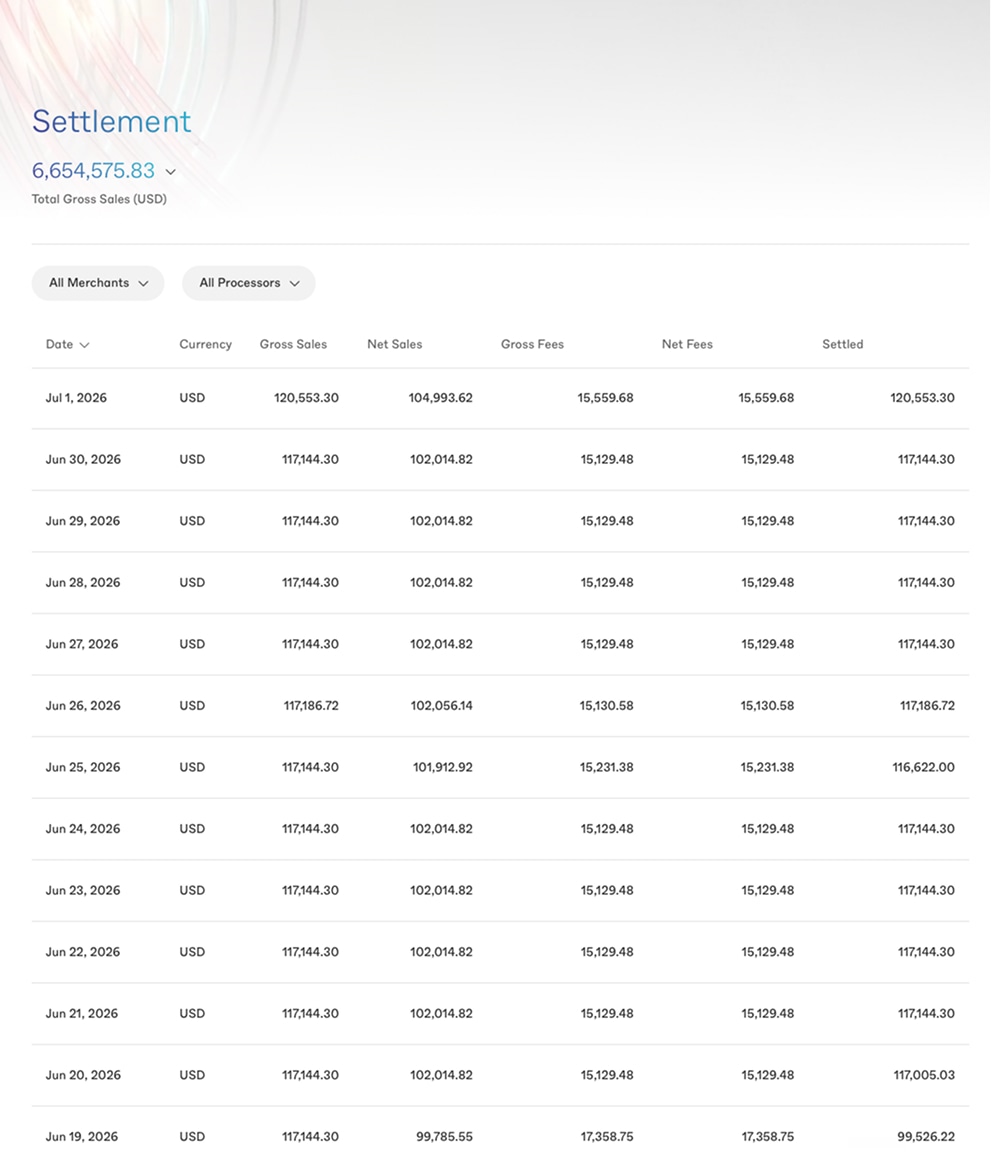
Yes, that's one of the most common setups we board. Invoices keep coming out of QuickBooks; the pay-by-link behind them runs on GivePayments processing; and settlements, fees, and refunds sync back into QuickBooks through our full API integration or a CSV import/export in QuickBooks' own format (which also covers Desktop workflows). Your reconciliation doesn't change, your cost of acceptance does.
If you invoice other businesses and want to get paid by card or ACH with the enhanced-data setup that keeps your costs down, that's exactly what we build.