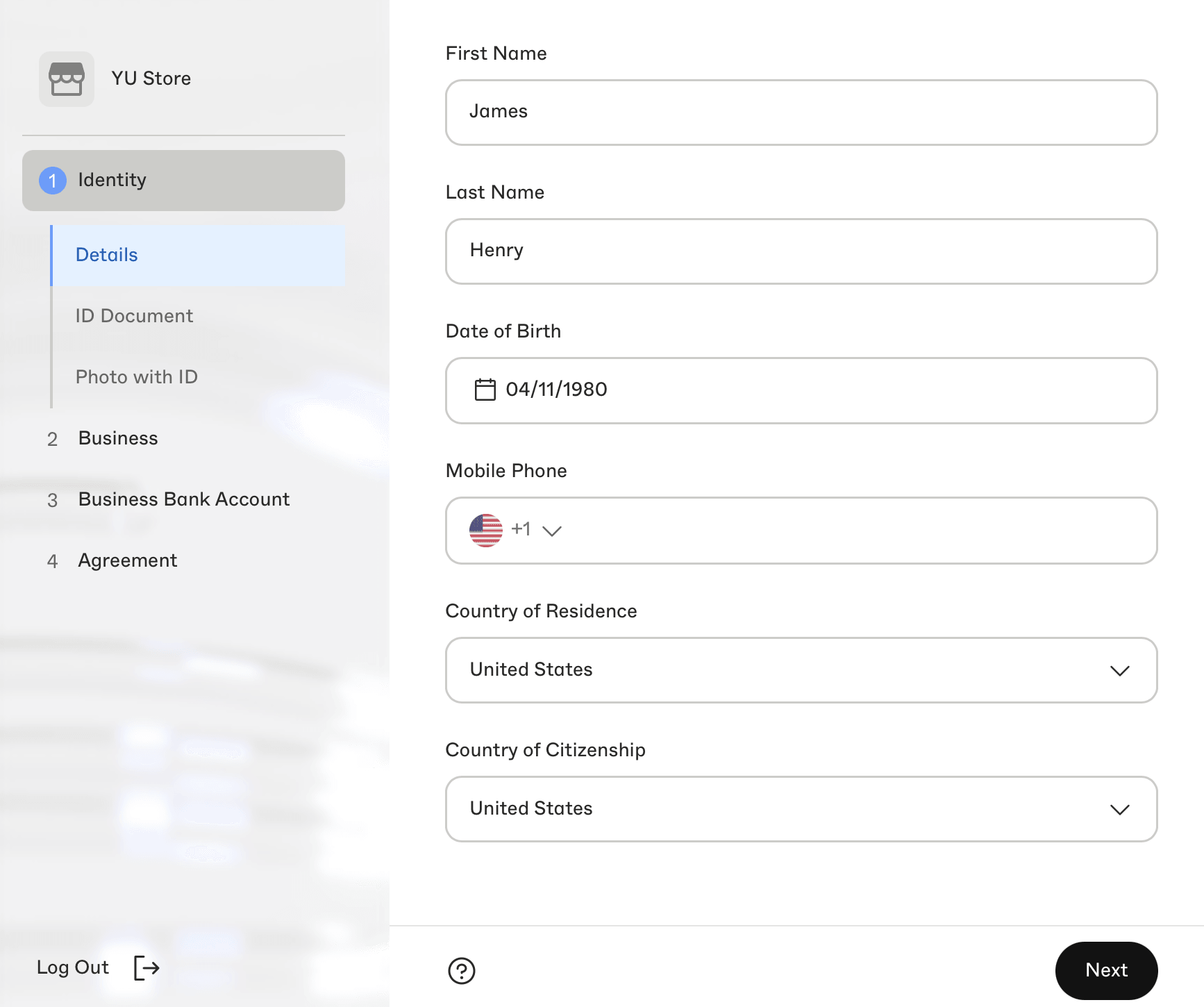
Native onboarding
Merchants onboard and board their accounts inside your product, in your product's language, not on a third-party detour.

Let your software embed payment acceptance natively, your merchants onboard and get paid inside your product instead of leaving to set up a separate processor. You own the experience and capture payment economics, and our high-risk underwriting depth means you can embed payments even for merchants in elevated-risk verticals that mainstream platform infrastructure declines.
Answer first
Every platform with merchants on it faces the same leak. A merchant signs up for your software, then leaves to go set up payments with a separate processor, a disjointed onboarding, an experience that lives outside your product, and a stream of payment economics flowing entirely to someone else. The payments were always happening through your platform's merchants. They just weren't happening through your platform.
Embedded payments closes that leak by making acceptance a native part of your product. The merchant onboards inside your software, gets paid inside your software, and never experiences payments as a third-party detour. You get a better product, a tighter onboarding funnel, and a share of revenue that used to walk out the door, and your merchants get a single, coherent experience instead of two systems they have to reconcile.
What you get
Merchants onboard and board their accounts inside your product, in your product's language, not on a third-party detour.
Capture a share of processing revenue, or set your own pricing on a facilitator model and keep the margin.
Embedded is deeper than integrated: acceptance, onboarding, and the economics live inside your platform, and you control the flow.
We sponsor and board sub-merchants in elevated-risk verticals that mainstream platform infrastructure quietly declines.
How it works
These terms get used loosely, but the difference is real and worth being precise about, because it changes what you own. Integrated payments typically means wiring your software to an external processor so the systems exchange data, convenient, but the merchant still has a separate processor relationship, and the economics and experience largely live outside your product. Embedded payments goes deeper: acceptance, onboarding, and usually the economics live inside your platform. The merchant experiences payments as a native feature, and you control the flow rather than handing off to a partner.
The practical upshot is ownership. Integrated is a connection; embedded is a capability you own. Embedded is what lets you shape the onboarding, present payments in your own product's language, and monetize the flow, which is why platforms that are serious about payments as a product line build embedded rather than just integrated. And because our underwriting was built for high-risk from the ground up, embedded payments works even when your users operate in hard verticals that other providers turn away.
Monetizing the flow
Because the payments were already running through merchants on your platform, embedding them captures revenue that was previously going entirely to an outside processor, with portfolio-wide analytics on every account you board.
How it works
A conversation about your software, your merchant mix, and how much of the stack you want to own.
Referral, PayFac-as-a-Service, or full facilitator, set by your volume, merchant mix, and appetite for ownership.
Our high-risk underwriting confirms we can sponsor and board the merchants you serve, including elevated-risk verticals.
Acceptance and onboarding go native inside your product, and the payment economics become a revenue line you own.
FAQ
Embedded payments means payment acceptance built natively into a software platform, so the platform's users, the merchants on it, can get paid inside the product rather than going off to set up a separate processor. The merchant signs up, onboards, and accepts payments without ever leaving your software, and the payment experience feels like part of your product. It's how vertical SaaS and platforms turn payments from a third-party add-on into a native feature.
Integrated payments usually means connecting your software to an external processor so the two systems talk, the merchant still has a separate processor relationship. Embedded payments goes further: the payment acceptance, onboarding, and often the economics live inside your platform, so the merchant experiences payments as a native part of your product rather than a bolted-on integration. Embedded is deeper, owns more of the experience, and typically lets the platform monetize the payment flow.
Embedded payments turn a flow that was leaving your product into a revenue line inside it. Depending on the model, a platform earns a share of processing revenue or, on a facilitator model, sets its own pricing to merchants and keeps the margin. Because the payments were always happening through merchants on your platform, embedding them captures economics that were previously going entirely to an outside processor. How much you earn scales with how much of the stack you own.
Yes, if the underlying infrastructure underwrites high-risk, and most embedded-payments providers don't. Mainstream platform-payments infrastructure assumes low-risk merchants and declines anything elevated-risk, which leaves platforms serving harder verticals stuck. Our underwriting depth in high-risk categories means we can sponsor and board the merchants on your platform that other providers turn away, so you can embed payments even when your users run high-risk models.
How you embed, referral, PayFac-as-a-Service, or full facilitator, depends on your volume, your merchant mix, and how much of the stack you want to own. The starting point is a conversation about your platform and your users.