High-Risk Merchant Accounts, Without the Guesswork
A high-risk merchant account lets businesses in elevated-risk categories accept cards and ACH through a bank-sponsored account underwritten for their risk, with rate ranges published up front, AI chargeback defense, reserves that taper, and underwriting that won't drop you as you scale.
Card-not-present transactions, e-commerce, phone, recurring billing, carry more fraud and dispute risk than a chip terminal. Recurring and free-trial billing raises the profile further, since cancellation friction is a top source of disputes.
Most of the market either won't board you or boards you fast and drops you later. We do neither.
Mass-market aggregators
Typical high-risk broker
GivePayments
Underwriting
None up front; automated termination later
Light; boards fast to earn commission
AI screen + human-reviewed written decision
Pricing transparency
Flat published rate (until you're dropped)
Hidden; quoted per deal
Ranges published by industry + estimator
Reserves
Sudden holds when a model trips
Often vague, rarely explained
Defined reserve that tapers, explained in writing
Deplatform risk
High, the core failure mode
Varies by sponsor stability
Low, underwritten properly before boarding
Chargeback tooling
Generic
Add-on, if any
AI fraud scoring + dispute defense built in
Support
Ticket queue
Broker, not the processor
US-based, processor-direct
How approval works
A written decision, same-day to 3–5 business days.
1
You apply
Submit your business details, processing history, and supporting documents.
2
We screen the risk signals
AI risk screening reads your category, volume, ticket, billing model, and history in minutes.
3
An underwriter reviews the file
Human judgment on prior statements, chargeback history in context, and certifications.
4
You get a written decision
Mainstream high-risk categories are usually boarded same-day to 3–5 business days. Sponsor-concurrence verticals add review time, and we set that expectation before you start.
We publish ranges, not a single hero rate. Final rate is set by underwriting, but you see the band first, every time.
3.0–5.0%
B2B & invoicing
~2.9%
Nonprofits
3.0–4.0%
Retail & SaaS-type subscriptions
4–6%
Nutraceuticals & continuity billing
5–9%
Peptides & GLP-1 (often with a reserve)
Model your own number with the rate estimator on the pricing page.
Reserves
Reserves, and why ours taper
A rolling reserve withholds a percentage of your sales for a set period as a buffer against future chargebacks and refunds. It's standard in high-risk processing, a processor that claims it never uses reserves is either mispricing your risk or planning to drop you.
The difference is transparency: we tell you the reserve percentage, the hold period, and the conditions under which it tapers down as your account builds a clean history. You'll find your specific terms in your underwriting memo, not buried in a contract.
Fraud & chargebacks
AI fraud and chargeback defense
Because chargeback ratios are what get high-risk accounts terminated, fraud prevention is the single most valuable thing we do. Every transaction runs through AI risk scoring, velocity checks, device and behavioral signals, and patterns tuned to your vertical, so suspect activity is blocked before it settles.
When disputes come, our tooling handles alerts and representment to keep you under the Visa VAMP and Mastercard BRAM thresholds.
Industries we board
If a bank flagged you, we probably specialize in you.
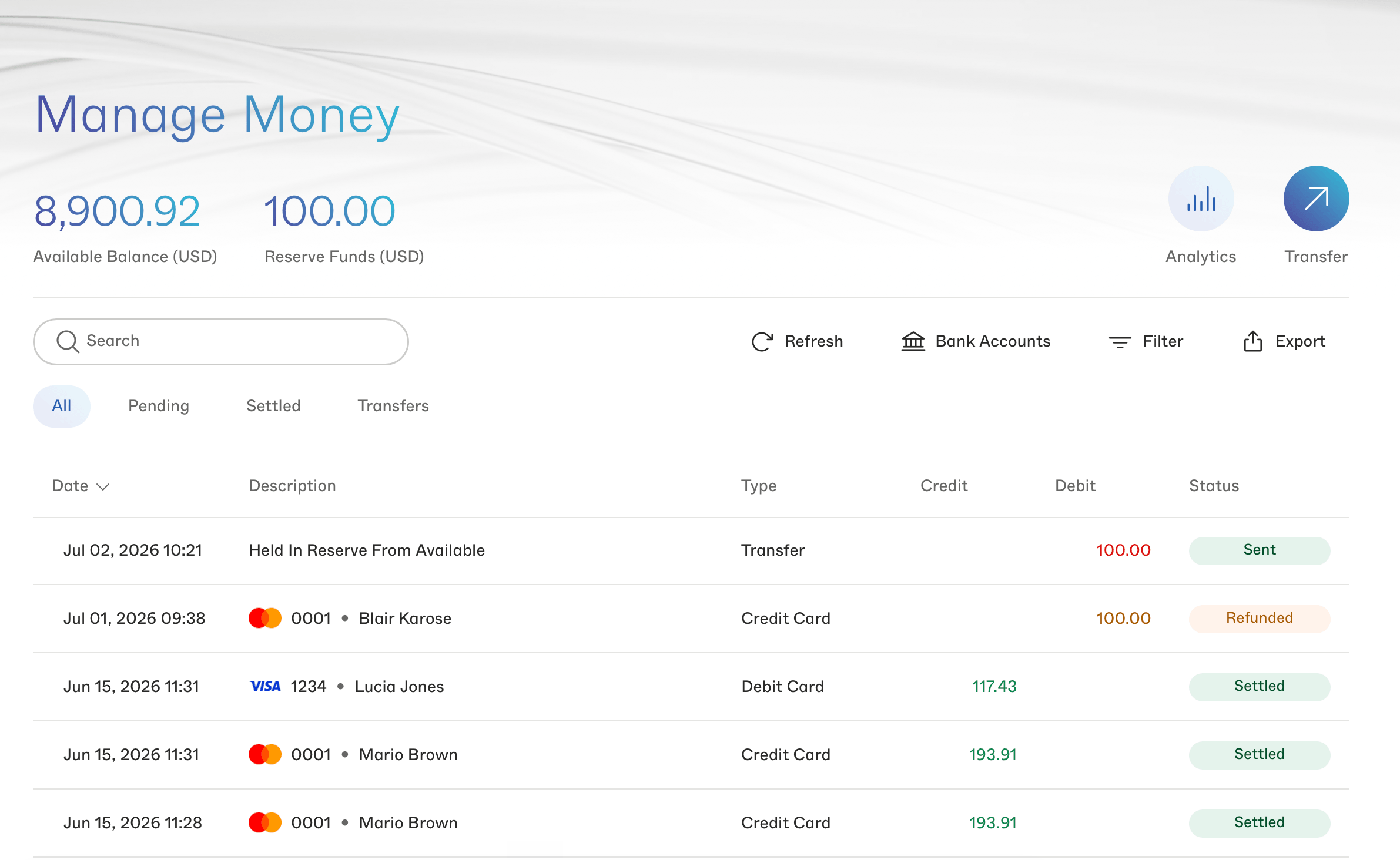
No mystery holds. Your available balance, any reserve, and every settled, pending, or refunded transaction sit in one ledger, and when a reserve applies, its percentage and taper are disclosed in writing before you board.
Available balance and reserve, always visible
Every transaction status in one ledger
Reserve terms disclosed up front, and they taper
FAQ
High-risk merchant account FAQ
What is a high-risk merchant account?
A high-risk merchant account is a payment-processing account for a business that card networks and acquiring banks consider more likely to generate chargebacks, fraud, or regulatory exposure. The classification is driven largely by your merchant category code (MCC), your average ticket, whether you bill on a card-not-present or recurring basis, and your dispute history. It works like any other merchant account, you accept cards and ACH and get funded, but it is underwritten more carefully, often carries a reserve, and is priced for the added risk.
How do I get approved for a high-risk merchant account?
You submit an application with your business details, processing history, and supporting documents (EIN, bank info, prior statements, and any certifications your vertical requires). GivePayments runs AI risk screening, an underwriter reviews the file, and you receive a written decision, typically same-day to 3–5 business days. Categories that need sponsor concurrence take longer. Clean documentation, a realistic chargeback history, and the right certifications (LegitScript for GLP-1 and telehealth, for example) are the biggest levers on approval speed.
How much does a high-risk merchant account cost?
Rates depend on the vertical and risk profile. Our published ranges run from about 2.9% for nonprofits and 3.0–5.0% for B2B and invoicing, up to 4–6% for nutraceuticals and subscription billing and 5–9% for peptides and GLP-1. Higher-risk accounts may also carry a rolling reserve that tapers as the account matures. See the full table on our pricing page; your final rate is set by underwriting.
Why do processors drop high-risk merchants?
Mass-market platforms like Stripe, PayPal, and Square board merchants instantly without real underwriting, then rely on automated risk models to terminate accounts later. When a high-risk merchant's volume grows or chargebacks tick up, the model trips and the account is frozen, often with funds held. A specialist underwrites the risk before boarding, sets appropriate reserves, and supports the account, which is why properly-underwritten high-risk accounts are far more stable.