
Resource · Guide
How to Get a High-Risk Merchant Account
To get a high-risk merchant account, apply with a processor that boards your category, submit complete documentation, business and ownership details, bank statements, processing history, and any category-specific compliance items, and let underwriting review your volume, chargebacks, and model. Strong, honest documentation clears the process fastest; restricted categories add a sponsor pre-approval step. Be wary of anyone promising guaranteed or instant approval with no review.
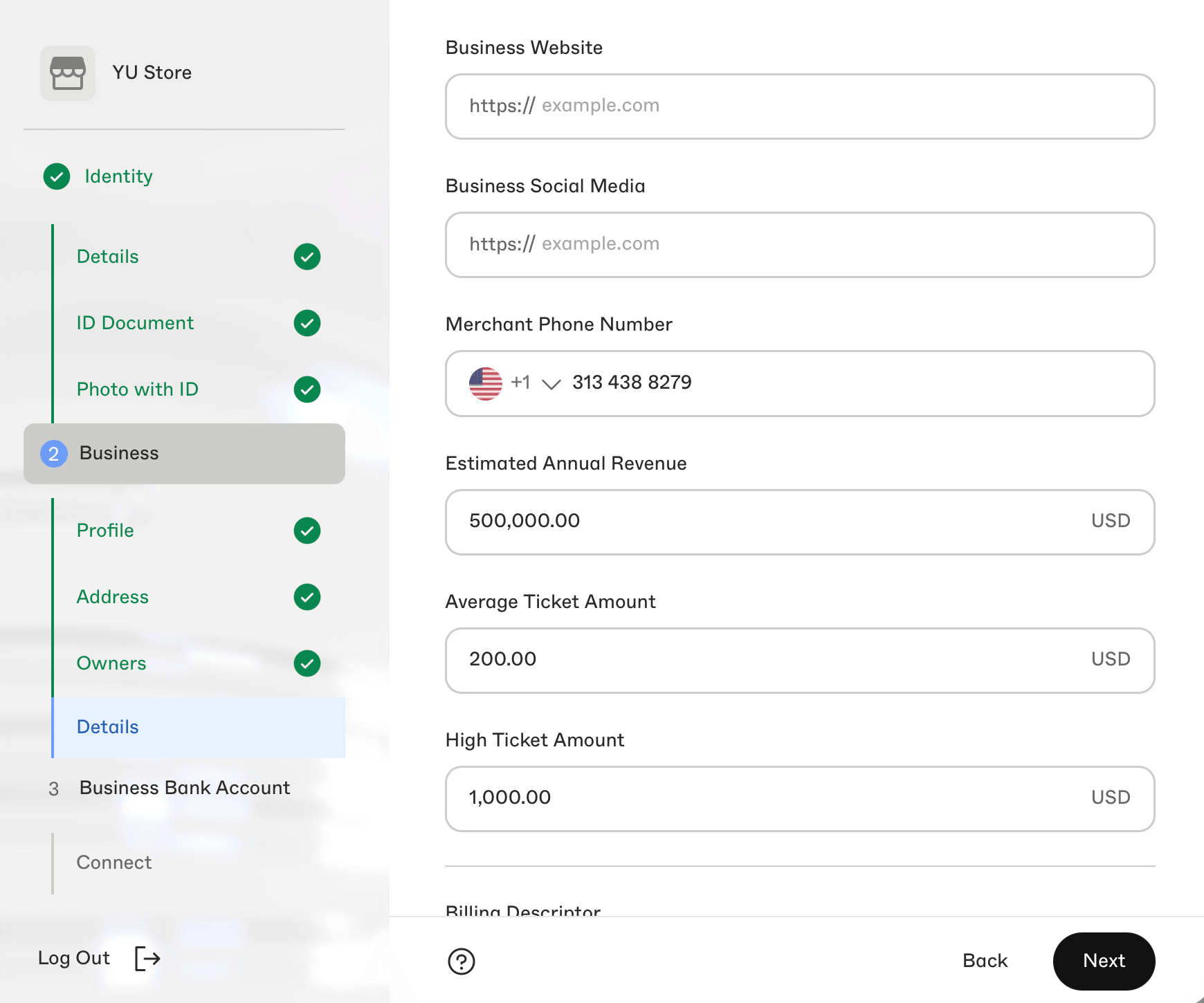
Approval is a review, not a coin flip
The first thing to understand about getting a high-risk merchant account is that real approval involves a real review. That's a feature, not an obstacle. The processors that “approve instantly, no questions” are the aggregators that don't underwrite you until you become a problem, and then they freeze or terminate the account. A processor that actually looks at your business before boarding it is the one whose account will still be running a year from now. So the goal isn't to dodge underwriting; it's to walk into it prepared, because preparation is what turns a slow, uncertain process into a fast, clean one.
Getting approved comes down to three things you control: applying somewhere that boards your category, giving underwriting a complete and honest picture, and being ready for any compliance step your vertical requires.
Get your documents ready
The single biggest lever on approval speed is having your paperwork in order before you apply. Most underwriting will ask for:
- A completed application with business details and beneficial-ownership information.
- Government ID for the principals.
- Recent business bank statements, usually about three months.
- Prior processing statements, if you've processed before. A clean processing history is one of the strongest things you can show.
- Your website and product details, so underwriting can see what you actually sell and how you market it.
Then there are category-specific items. An MSB needs FinCEN registration and any state money-transmitter licenses. Some health verticals need LegitScript certification. A dropshipper benefits from showing fulfillment capability. Knowing your category's extra requirements ahead of time keeps you from a back-and-forth that drags the timeline out.
What underwriting is actually looking at
Underwriting isn't trying to catch you out, it's trying to get comfortable that the account will be stable. It weighs your volume and average ticket, your chargeback history against the card-brand thresholds, your business model and how you market it, and your compliance posture for regulated categories. A higher-risk profile doesn't mean a no; it means a more carefully structured account, a higher rate, perhaps a reserve, sometimes sponsor pre-approval. The point of the review is to size the account to your reality. We walk through the full sequence in how our underwriting works.
Restricted categories and the concurrence step
Some categories, negative-option/free-trial billing, pure card-not-present nutraceuticals, marketplaces and PayFac models, commercial crowdfunding, MLM, MSBs, online gaming, require sponsor concurrence: the sponsor bank pre-approves the specific merchant before boarding. That adds a step and some time, and a few extra documents. It's not a hurdle for its own sake; it's what lets these categories be boarded at all, stably. If your vertical is one of these, expect a consultation-led path rather than an instant decision, and budget a little more time.
Why applications get declined, and how to fix it
Most declines fall into a few buckets: a category the processor flatly won't board, incomplete or inconsistent documentation, a chargeback ratio above the thresholds with no plan to bring it down, deceptive or unsubstantiated marketing, or a model the underwriter just can't get comfortable with. The encouraging part is that several of these are fixable, better documentation, a cleaned-up website, a remediation plan for disputes. A processor that explains why it declined gives you something to act on, which is why a written, reasoned decision beats a black-box no.
If you're ready to apply with a processor that boards your category and explains its decisions, get approved , or read how our underwriting works first to see exactly what to expect.
FAQ
High-risk approval FAQ
How do I get approved for a high-risk merchant account?
Apply with a processor that boards your category, submit the documents underwriting needs (business and ownership details, bank statements, processing history if you have it, and any category-specific compliance items), and let underwriting review your volume, chargeback history, and model. Strong, complete documentation and an honest picture of your business clear the process fastest. Be wary of anyone promising guaranteed or instant approval with no review, real underwriting always looks before it approves.
What documents do I need to get approved?
Typically: a completed application with business and beneficial-ownership details, a government ID for the principals, recent business bank statements (often 3 months), prior processing statements if you've processed before, and your website or product details. Category-specific items may apply, for example, licensing for an MSB, LegitScript certification for some health verticals, or proof of fulfillment capability. Having these ready up front is the single biggest thing you can do to speed approval.
How long does high-risk approval take?
It varies by category and by how complete your application is. A straightforward, well-documented account can move quickly; a restricted category that requires sponsor pre-approval (concurrence) takes longer because there's an extra review step. The honest answer is that timelines run from same-day for simple cases to several business days for complex or concurrence-required ones, and a complete document package is what keeps you at the fast end.
Why do high-risk applications get declined?
Common reasons: a prohibited category the processor simply won't board, incomplete or inconsistent documentation, a chargeback history above the card-brand thresholds with no remediation plan, deceptive marketing or unsubstantiated claims, or a model the underwriter can't get comfortable with. Many declines are fixable, better documentation, a cleaned-up site, a remediation plan, which is why a processor that explains its decision is worth more than one that just says no.
Ready to apply with a processor that boards your category?
Submit complete documentation, get a real review, and get a reasoned decision, not a black-box no.